HGV cab essentials: what the rules say about each
Most of what drivers carry is personal choice. Four things aren't quite: each has a rule behind it, and the rule is what decides whether the thing is worth the space.
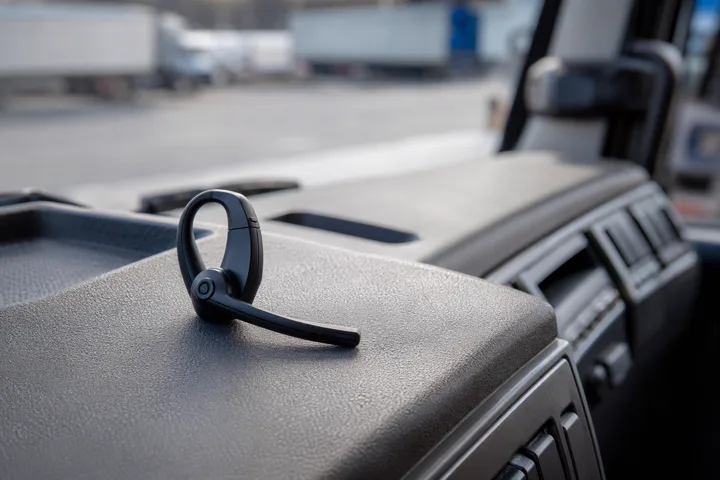
A hands-free headset
Holding a phone at the wheel is 6 penalty points and a £200 fine, and that includes when you're stopped at lights or queuing. Taken to court, the maximum fine for a lorry driver is £2,500. Hands-free is allowed as long as you don't hold the device at any time, and gov.uk lists a Bluetooth headset and voice command as ways of doing that. You still have to stay in full control: the police can stop you if they think you're distracted.
What to look for: one that answers and ends a call without touching the phone. If it needs a tap on the handset, it isn't hands-free.
A phone mount
A dashboard holder or a windscreen mount also counts as hands-free access, with one condition from the same rule: "the device must not block your view of the road and traffic ahead." Not having a full view of the road is 3 penalty points. On an HGV that means keeping the mount out of the band in front of the steering wheel; the limits are on our dash cam page, and they apply to a phone just the same.
What to look for: a dashboard or air-vent mount rather than a windscreen one, so the phone is never in the wiped area at all.
A 12V cool box
Under the drivers' hours rules for goods vehicles, "after a driving period of no more than 4.5 hours, a driver must immediately take a break of at least 45 minutes unless they take a rest period." Where that break lands is rarely a choice. A cool box in the cab means the break is a meal rather than a hunt for one.
What to look for: a box that runs off the vehicle's socket, and one that fits the cab's plug and the cab's voltage. Check both before you buy: plenty of listings assume a car.
See a 12V cool box on Amazon →
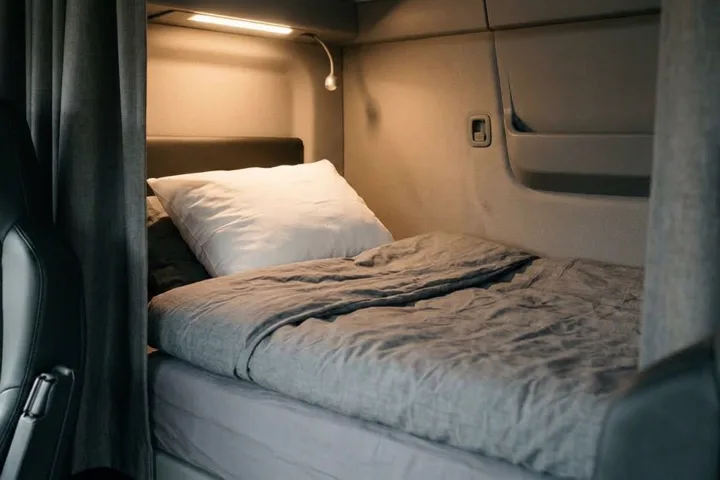
Bedding for the bunk
If you sleep in the cab, one rule matters more than the bedding. In gov.uk's words: "It is not permitted to take regular weekly rest periods and any weekly rest of more than 45 hours which include compensation for previous reduced weekly rest in a vehicle." Daily rests are a different matter, and a bunk that's slept in every night deserves a proper duvet and pillow rather than a coat.
What to look for: bedding sized to the bunk, so measure it first.
What isn't on this list
The tools for the walkaround itself, the tread depth gauge, the pressure gauge and the rest, have their own page: HGV walkaround check kit. Dash cams have theirs too, because the rules for fitting one are longer than the shopping.
To see a week of driving against the drivers' hours limits, there is a free drivers' hours checker. It looks only at the week you type in.
Phone, headset and mount rules and penalties are from gov.uk's Using a phone, sat nav or other device when driving; the break and weekly rest quotes are from gov.uk's Drivers' hours: goods vehicles guidance, section 1 (breaks, and sleeping facilities under weekly rest); all read September 2026.
Guidance only, not legal advice. Always check against current gov.uk guidance. Roadworthy is an independent tool provider and is not affiliated with, or endorsed by, DVSA.