
What's worth carrying in the cab, and what the rules say about each
The kit, in one place. Each group links to a short guide that starts with the rule, DVSA's categorisation, drivers' hours or the phone law, and then says what to look for when you buy. None of it is a review, and none of it replaces the check itself.
HGV walkaround check kit: five tools worth carrying
The defects a walkaround can't judge by eye: tread depth, tyre pressure, a wheel nut that has moved, a strap that's had it. A gauge for each, and what DVSA does when the number is wrong.
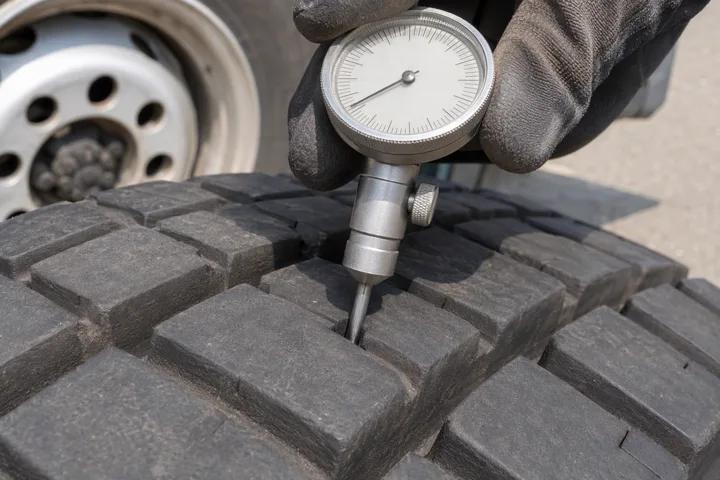
Tread depth gauge
Look for a scale you can read clearly around 1mm, the legal minimum.
See a tread depth gauge on Amazon → Paid link
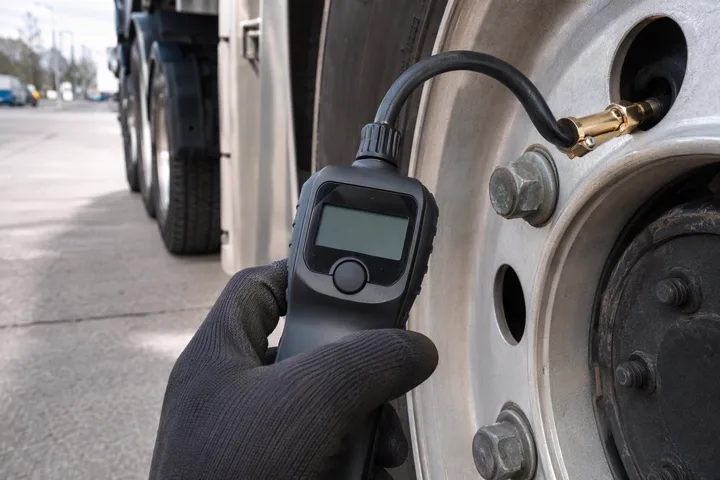
Tyre pressure gauge
Look for a gauge whose maximum reading is above your tyres' recommended pressure.
See a tyre pressure gauge on Amazon → Paid link
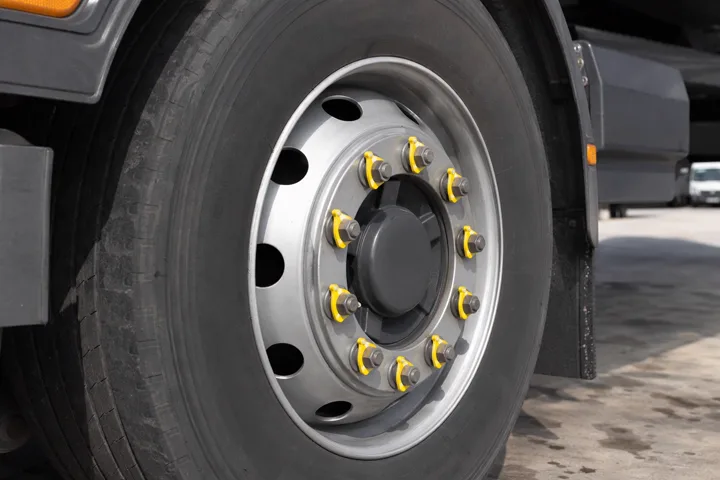
Wheel nut indicators
Indicators come in nut sizes, so check the size of your wheel nuts first.
See wheel nut indicators on Amazon → Paid link
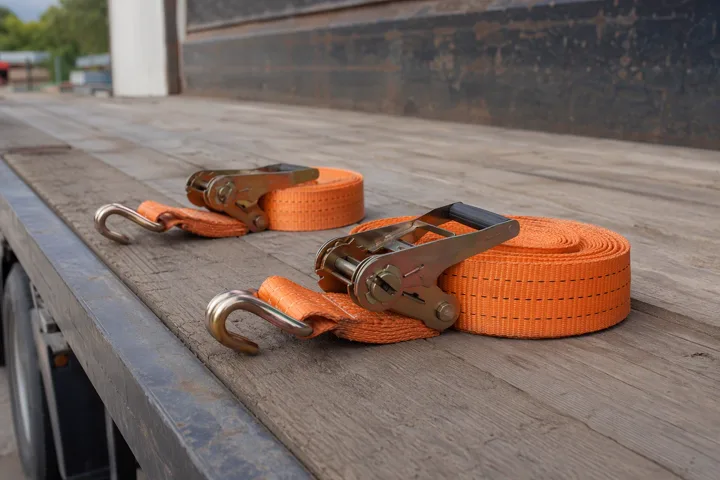
Spare load straps
Look for straps sold as made to BS EN 12195-2, and the lashing capacity on the label.
See ratchet straps on Amazon → Paid link
A winder keeps the spare coiled tight. See a strap winder on Amazon → Paid link
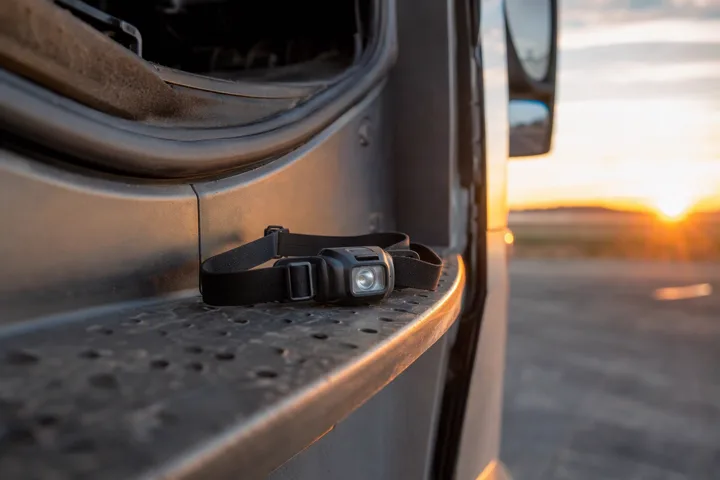
Head torch
A head torch leaves both hands free for the gauge and the checklist. A rechargeable one saves carrying batteries.
See a head torch on Amazon → Paid link
Dash cams: where it can go, and the rules for a work vehicle
The windscreen zones and their limits, the walkaround line about the wiped area, and what the ICO expects when the camera is in a work vehicle.

Dash cam
Can the mount sit outside the wiped area on your screen? Measure where it can go before you buy, not after.
See a dash cam on Amazon → Paid link
Cab essentials: what the rules say about each
A hands-free headset, a phone mount, a 12V cool box and bedding for the bunk. The penalty points, the 45-minute break and the weekly rest rule behind each one.
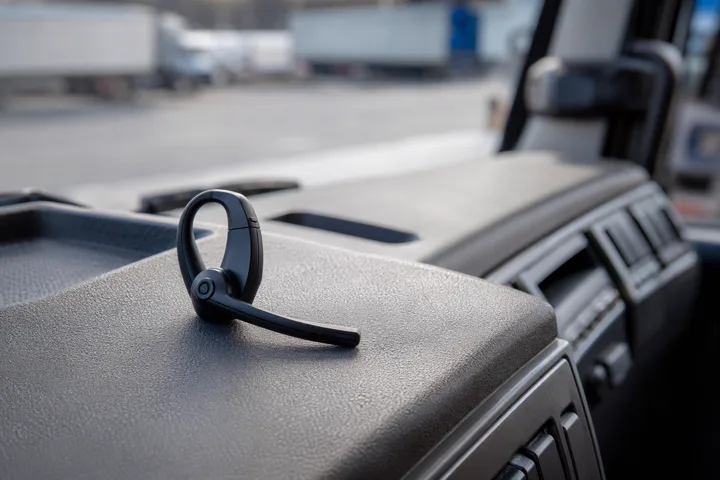
Hands-free headset
Look for one that answers and ends a call without touching the phone. If it needs a tap on the handset, it isn't hands-free.
See a Bluetooth headset on Amazon → Paid link

Bedding for the bunk
Bedding sized to the bunk, so measure it first.
See cab bedding on Amazon → Paid link
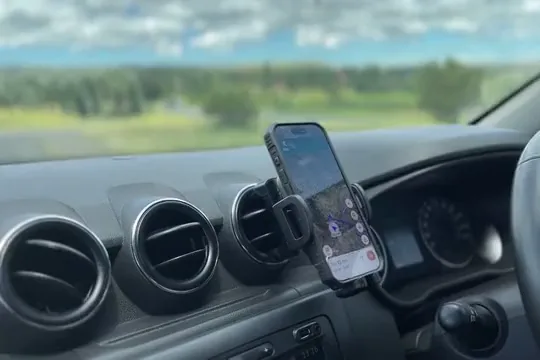
Phone mount
Look for a dashboard or air-vent mount rather than a windscreen one, so the phone is never in the wiped area at all.
See a phone mount on Amazon → Paid link
12V cool box
Look for a box that runs off the vehicle's socket and fits the cab's plug and voltage. Plenty of listings assume a car.
See a 12V cool box on Amazon → Paid link
Found something on the walkaround?
Check it against DVSA's published categorisation in seconds, drive it or park it, and the likely penalty, with 3 free checks.
Try 3 free checks → See the walkaround pack