HGV walkaround check kit: five tools worth carrying
Most of a walkaround check is looking. But some of the defects that stop a vehicle can't be judged by eye: tread depth, tyre pressure, a wheel nut that has moved. These five tools cover them.
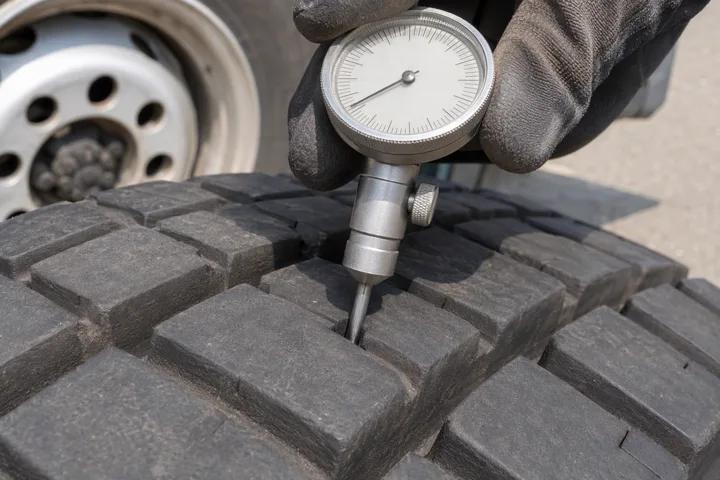
Tread depth gauge
On a goods vehicle over 3,500kg, the legal minimum is 1mm, across a continuous band covering at least three-quarters of the tread's breadth, all the way round the tyre. Below that is an immediate prohibition. Close to the limit, legal and illegal are a fraction of a millimetre apart. That's a job for a gauge, not a glance.
What to look for: a scale you can read clearly around 1mm.
While you're down there: if you probe a cut, use something blunt, never sharp. The check mustn't cause the damage it's looking for.
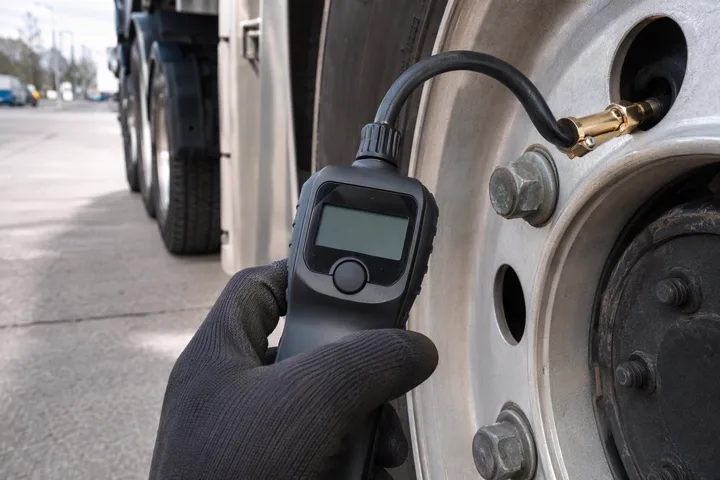
Tyre pressure gauge
On twin wheels, a soft tyre pushes its share of the load onto its partner. DVSA's defect categorisation makes a seriously under-inflated tyre an immediate prohibition when it's likely to affect the steering or overload the other tyre of a twin pair, and when it's a single tyre on a non-steered axle. On a single or steered-axle tyre, a measured pressure of 50% or less of the recommended figure, or of the other tyre on the same axle, is an immediate prohibition too.
What to look for: a gauge whose maximum reading is above your tyres' recommended pressure.
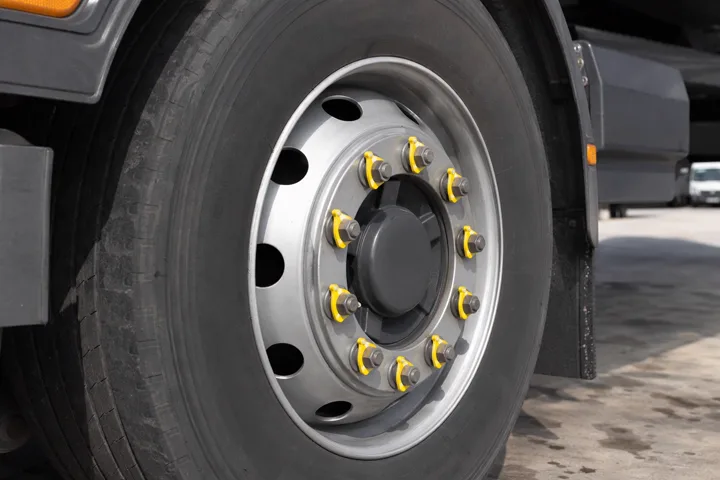
Wheel nut indicators
DVSA grades loose wheel nuts by count. Any one nut missing or loose is a delayed prohibition. More than one is an immediate prohibition. If you run wheel nut indicators and one has moved, even with the nuts looking tight, get the torque checked before the vehicle is used.
What to look for: indicators come in nut sizes, so check the size of your wheel nuts first.
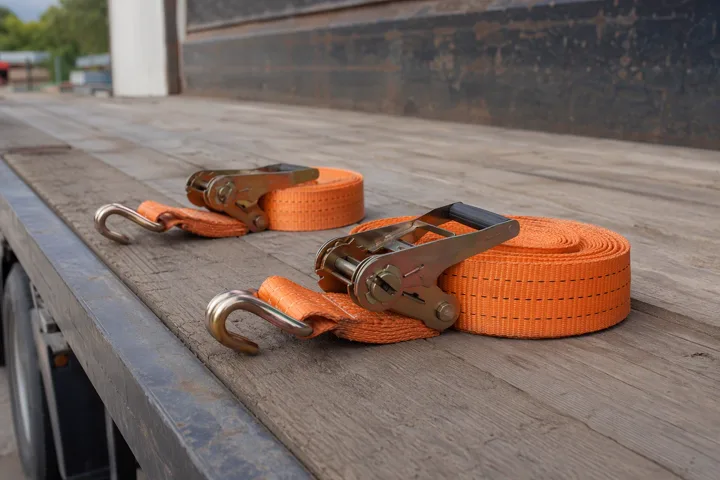
Spare load straps
A frayed or damaged strap found on the walkaround should come out of use, and the restraint left on the load still has to be enough. A spare in the cab is what makes both possible. In DVSA's categorisation, securing equipment in poor condition that doesn't affect its function is an inspection notice, and load securing that's grossly inadequate because of its condition is an immediate prohibition.
The restraint rule behind it: the securing system has to withstand the whole weight of the load forward, half the weight to the sides and half to the rear.
What to look for: straps sold as made to BS EN 12195-2, and the lashing capacity on the label. The restraint rule above is all about rating: a 10-tonne load needs restraint rated for 10 tonnes forward, and a light strap doesn't become a lorry strap by being on a lorry. The standard is also what sets when a strap is too worn to use, not the roadside categorisation.
See ratchet straps on Amazon →
And a winder: a small hand crank that rolls a strap into a tight coil. A strap left loose in a locker gets knotted and frayed, and a frayed strap should come out of use; wound tight, the spare is still a spare when it's needed. See a strap winder on Amazon →
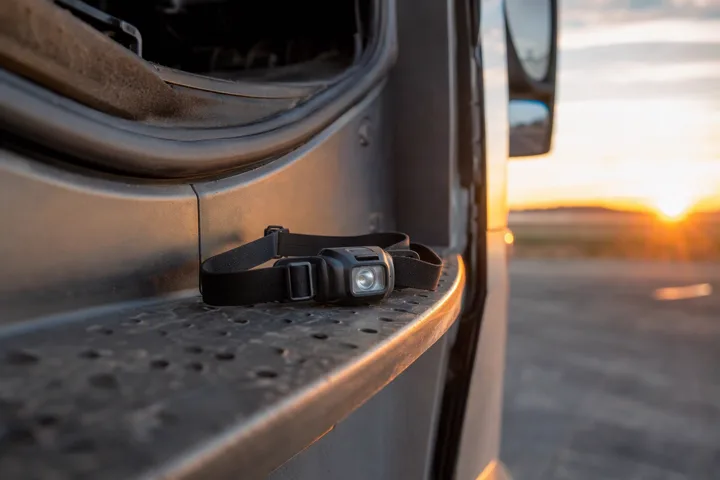
Head torch
A walkaround done before sunrise, or under the vehicle, is done by torchlight. The things worth finding are small: an inner tyre on a twin pair, a cut in a sidewall, a moved wheel nut indicator.
What to look for: a head torch leaves both hands free for the gauge and the checklist. A rechargeable one saves carrying batteries.
What the kit doesn't do
None of this replaces the check itself, or the record of it. Write the defects down, nil defects included, and keep the reports for at least 15 months. What a walkaround check must record covers what goes on the sheet.
Tyre, wheel and load securing categories are from DVSA's Categorisation of Vehicle Defects; the restraint rule is from DVSA's load securing guidance, current at September 2026.
Guidance only, not legal advice. Always check against current DVSA guidance; at the roadside, categorisation is the examiner's decision on the day. Roadworthy is an independent tool provider and is not affiliated with, or endorsed by, DVSA.